The Third World War IV: Finis Omnia Rerum
From what media survives. An alternate ending.
(Part One: The Guns of June)
(Part Two: The Missiles of July)
(Part Three: Writer's Notes)
July 1, 1989
NUCLEAR WAR – BUSH AUTHORIZES LIMITED COUNTERFORCE STRIKE; SOVIET FORCES RESPOND WITH FULL SCALE ATTACK; UNITED STATES RESPONDS IN KIND; CITIES BURNING ACROSS NORTHERN HEMISPHERE; REPORTS AS THEY BECOME AVAILABLE
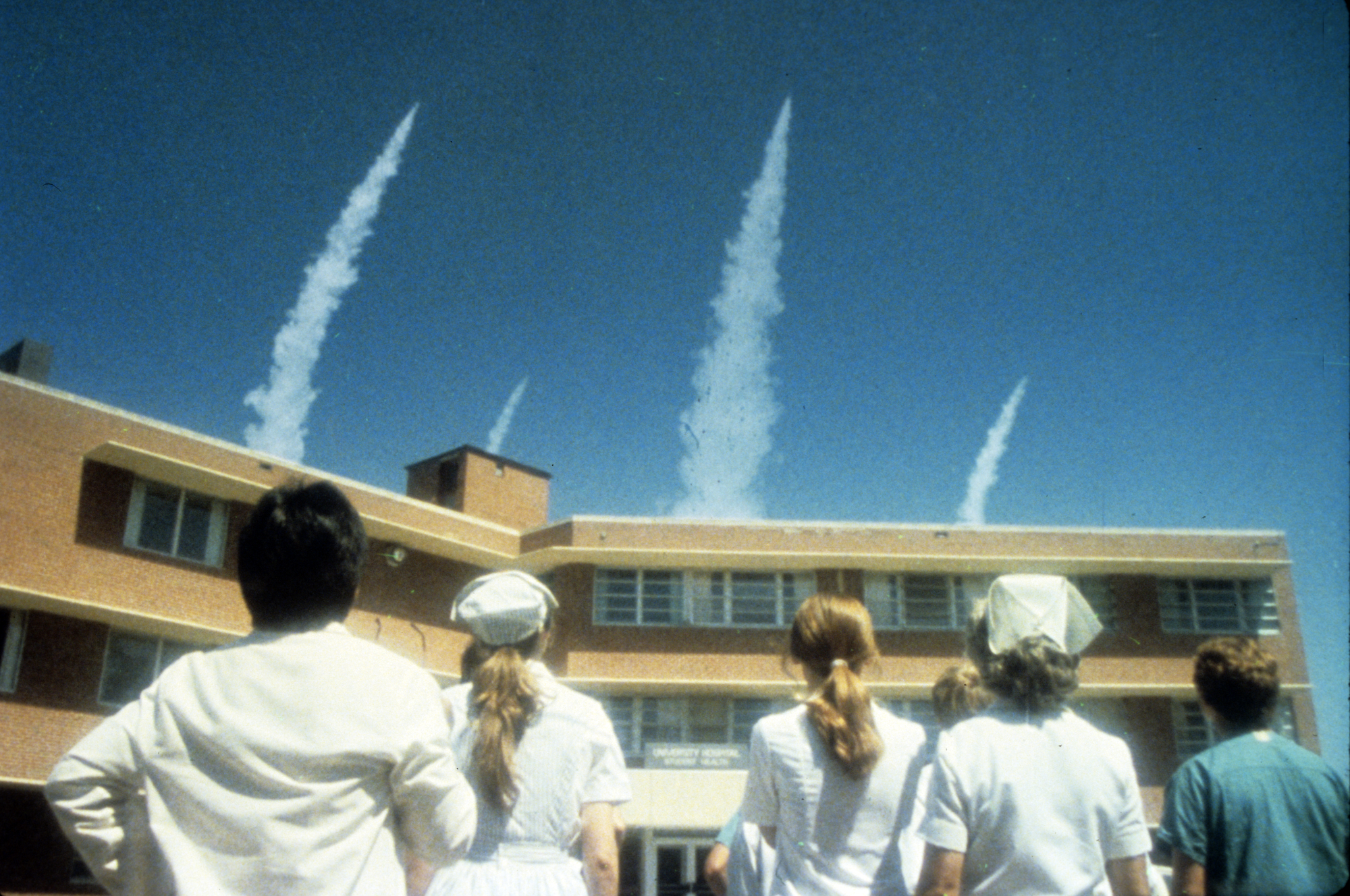
ANCHORAGE, Alaska — At 08:47 Coordinated Universal Time today, four hours and seventeen minutes after the detonation of nuclear weapons over five Atlantic cities, the President of the United States, aboard the National Emergency Airborne Command Post in continuous orbit over the central United States, authorized the execution of a limited strategic option of the Single Integrated Operational Plan, designated by its planning code as Major Attack Option Three (Counterforce), against the strategic forces, command and control facilities, and selected leadership targets of the Union of Soviet Socialist Republics. The order was transmitted at 08:51 UTC. The first weapons detonated upon Soviet territory at 09:23 UTC.
At 14:23 UTC, the Soviet Strategic Rocket Forces, the Long-Range Aviation, the Northern and Pacific Fleet ballistic missile submarine forces, and the strategic forces of the Warsaw Pact directly subordinate to the Soviet General Staff executed what every surviving American intelligence assessment has identified as a general strategic release against the territories of the United States, the United Kingdom, France, the Federal Republic of Germany, Italy, Belgium, the Netherlands, Denmark, Norway, Greece, Turkey, Canada, Japan, the Republic of Korea, Australia, and the People's Republic of China. The Chinese release was directed against the strategic forces of the People's Liberation Army Second Artillery Corps and against the principal cities of eastern China; the Chinese strategic response, executed approximately fourteen minutes later, was directed against the cities and military installations of the eastern Soviet Union.
At 14:38 UTC, the National Emergency Airborne Command Post, in coordination with the airborne command posts of the Strategic Air Command, the United States Atlantic Fleet, the United States Pacific Fleet, and the strategic forces of the United Kingdom and France, executed the general response contemplated by the Single Integrated Operational Plan against the residual targets of the Soviet Union and its remaining allies.
The exchange, in its entirety, occupied approximately thirty-eight minutes from initiation to substantial completion. Subsequent strikes, conducted by surviving forces of all parties against targets of opportunity and against pre-designated alternate target sets, continued through the afternoon and into the early evening Alaska time. By nightfall in the Pacific theater, the strategic forces of the principal participants had largely expended their immediate-launch arsenals.
The number of nuclear weapons detonated upon the surface of the Earth between 04:30 UTC on this date and approximately 06:00 UTC on the 2nd of July is estimated by the surviving United States Strategic Air Command Post here at Elmendorf Air Force Base, whose briefing officers have continued to brief at two-hour intervals through the afternoon, in coordination with surviving NORAD assets at Cheyenne Mountain whose tunnel doors were sealed at 15:14 UTC and who remain in restricted communication, at between four thousand and five thousand. The figure cannot be more precise. It does not, in any case, much matter.
This dispatch is filed from Elmendorf Air Force Base, near Anchorage, Alaska, at 23:30 Alaska Daylight Time on the 1st of July 1989. It is filed by means of a single high-frequency single-sideband military radio circuit linking the Joint Operations Center at Elmendorf to the Royal New Zealand Air Force base at Whenuapai, near Auckland, by which means it is to be transmitted to the surviving offices of the Reuters news agency in that country, which are, by every report we have received, the only offices of any international news agency presently operational anywhere in the Pacific theater. The dispatch is composed in the open press style by which this correspondent, three days ago in the office of his bureau in San Francisco, would have composed it. The bureau in San Francisco, by the report received here at 16:40 UTC from a survivor of the Naval Air Station at Alameda, no longer exists. This correspondent is alive in a way that the correspondent's wife, his three children, and his mother are not.
Anchorage
The outskirts of the city of Anchorage were glancingly struck with a small warhead. The strategic logic of the choice, by the assessment of the duty officer at the NORAD facility here, is that the Soviet strategic warhead inventory, in the configuration of the morning of the 1st of July, was inadequate to the targeting of all American cities of significance, and that Anchorage, chiefly important as the location of Elmendorf Air Force Base and of the principal radar facilities of the western approaches, was a target upon which only the air base itself was struck. The Elmendorf strike was a single 200-kiloton warhead. It detonated above the eastern runway at 15:39 UTC. The base is no longer operationally a base. The runways are cratered. The hangars, the headquarters buildings, the principal housing areas, and the F-15 alert facility are destroyed. The Joint Operations Center, located in a hardened underground facility on the western perimeter, survived. It is operational. From it, this dispatch is being filed.
The city of Anchorage itself, separated from the base by a distance of approximately five kilometers and by the terrain features of Ship Creek and the Knik Arm, sustained substantial blast damage in the eastern districts of Government Hill, Mountain View, and Russian Jack Springs. The downtown commercial core, the airport, and the residential districts of Sand Lake, Spenard, and the Hillside are largely standing. The hospitals (Providence Alaska Medical Center, Alaska Regional, the Alaska Native Medical Center) are operational, are overwhelmed, and are receiving patients in numbers that the facilities cannot, in the assessment of every physician this correspondent has spoken to, treat at any standard recognizable in medical practice. The Mayor of Anchorage, Mr. Tom Fink, addressed the city by radio at 18:00 Alaska time and informed the population, in language of considerable simplicity, that the city would not be evacuated, because there was no place to evacuate to that the Mayor could in good conscience recommend; that the city would maintain order; that food, fuel, and medical supplies would be allocated by the city emergency operations center; that looters would be shot; and that the citizens of Anchorage were Alaskans, were Americans, and would, when the world that confronted them permitted it, be both.
The Cities
This correspondent has, since 17:00 UTC, attempted to compile from the reports reaching the Joint Operations Center a list of cities in the northern hemisphere upon which nuclear weapons were detonated during the exchange of this afternoon. The list is incomplete. It is, by the assessment of the Elmendorf duty intelligence officer who has been assisting me, the most complete list compiled at any single point on the planet. The Soviet Pacific Fleet submarine command facility at Petropavlovsk-Kamchatsky, struck by American counterforce weapons in the early phase of the exchange, was the principal alternative compilation point in the Pacific theater. It is no longer compiling.
The cities, in alphabetical order, in such measure as the reporting permits.
In the United States: Washington (Soviet first strike, morning); New York (Soviet first strike, morning); Atlanta (the surviving CNN bureau ceased filing at 14:44 UTC); Boston; Chicago; Cleveland; Dallas-Fort Worth (the Strategic Air Command auxiliary at Carswell Air Force Base); Denver; Detroit; Houston; Kansas City; Los Angeles; Miami; Minneapolis-Saint Paul; New Orleans; Norfolk and the Hampton Roads naval complex; Omaha (Strategic Air Command headquarters at Offutt; the Looking Glass airborne command post survives); Philadelphia; Phoenix; Pittsburgh; Saint Louis; Salt Lake City; San Diego (Naval Base San Diego); San Francisco and the Alameda complex; Seattle and the Puget Sound naval complex (the Bangor submarine base); the silo fields of Wyoming, Montana, North Dakota, South Dakota, Missouri, and Colorado, in patterns of multiple ground-burst weapons over each silo of which not less than 1,054 silos were so targeted; Cheyenne Mountain (multiple weapons; tunnels sealed; status uncertain); Site R near Blue Ridge Summit, Pennsylvania (multiple weapons; status uncertain); Mount Weather, Virginia (multiple weapons; status uncertain); the Greenbrier facility at White Sulphur Springs, West Virginia (one weapon; status uncertain).
In the United Kingdom: London (morning); Birmingham; Glasgow; Manchester; Liverpool; Leeds; the strategic submarine base at Faslane; the bomber bases at Marham, Coningsby, Lakenheath, Mildenhall; the early warning station at Fylingdales.
In France: Paris (morning); Lyon; Marseille; Toulouse; Bordeaux; the strategic submarine base at L'Île Longue; the strategic missile field on the Plateau d'Albion in Vaucluse; the bomber base at Mont-de-Marsan.
In the Federal Republic of Germany: Munich (morning); Hamburg; Frankfurt; Cologne; Stuttgart; Bremen; Hannover; Düsseldorf; Bonn (the Federal Republic's principal command facility at Marienthal in Rhineland-Palatinate; status of the Chancellor and senior government uncertain).
In Italy: Rome (the Holy Father, in Geneva, was confirmed alive at 19:00 UTC; Geneva was not struck); Milan; Naples; Turin; the naval facility at La Spezia.
In the German Democratic Republic, the Polish People's Republic, the Czechoslovak Socialist Republic: every principal city, in patterns consistent with Soviet counterforce strikes against United States and allied forces then operating in those territories. The Soviet command conducted these strikes upon territories nominally allied to the Soviet Union because the alternative, permitting the territories of the western Warsaw Pact states to remain occupied by NATO forces while the Soviet Union itself burned, was a calculation that the men in the Kremlin made in the affirmative. The advance elements of the United States Army that crossed into the German Democratic Republic three days ago and into the Polish People's Republic this morning are, by every report, no longer reporting.
In the Soviet Union: Moscow; Leningrad; Kiev; Minsk; Kharkov; Odessa; Riga; Vilnius; Tallinn; Gorky; Sverdlovsk; Chelyabinsk; Novosibirsk; Volgograd; Kuybyshev; Perm; Ufa; Kazan; Voronezh; Saratov; Krasnodar; Rostov-on-Don; Tbilisi; Yerevan; Baku; Tashkent; Alma-Ata; Frunze; Murmansk; Arkhangelsk; Vladivostok; Khabarovsk; the Plesetsk Cosmodrome; the silo fields of the Strategic Rocket Forces; the bomber bases of Long-Range Aviation; the submarine bases at Yagelnaya, Polyarny, Severodvinsk, Petropavlovsk-Kamchatsky.
In the People's Republic of China: Beijing; Shanghai; Guangzhou; Tianjin; Shenyang; Wuhan; Chongqing; the missile fields and bomber bases of the Second Artillery Corps; the leadership facilities at Zhongnanhai. The General Secretary, Mr. Jiang Zemin, has not been heard from since 15:00 UTC.
In Japan: Tokyo (the United States Forces Japan headquarters at Yokota Air Base); Yokohama; Osaka; Nagoya; Sapporo; Yokosuka and the United States Seventh Fleet base. The Emperor, the Imperial Family, and the Cabinet of Mr. Uno are reported alive at the dispersal facility at Matsushiro.
In the Republic of Korea: Seoul; Busan; Daegu; Osan Air Base; Kunsan Air Base.
In Canada: Ottawa; Toronto; Montreal; Vancouver; Halifax (the Canadian Forces Maritime Atlantic command); the NORAD station at Comox.
The list is incomplete. The list will be extended as further reporting is received. The reporting, at the hour of this dispatch, is becoming sparse.
The Survivors
The principal command authorities reported alive at this hour, in such measure as can be confirmed by communication from this facility:
The President of the United States, aboard the National Emergency Airborne Command Post.
The Vice President of the United States. Status: confirmed alive at Site R; communication intermittent; the facility itself reported heavily damaged from multiple nuclear impacts but for now functional.
The Speaker of the House and the leadership of the Congress at the Greenbrier facility: status uncertain. A single weapon was reported to have detonated near that facility. The facility was hardened against precisely such a strike. Communications, since 16:30 UTC, have been silent.
The Chief Justice of the United States: location undisclosed at the hour of the strikes; status uncertain.
The Prime Minister of the United Kingdom, Mrs. Thatcher, at PINDAR. Confirmed alive at 17:00 UTC. The status of PINDAR itself, struck by what is reported to have been multiple weapons in counterforce targeting of the central British government, is reported as "intact, but with serious damage to surface communication infrastructure." Communications now exclusively by survivable submarine-relay link.
The President of France, M. Mitterrand, at the Taverny command facility. Confirmed alive at 18:00 UTC. The Taverny facility, hardened against direct strike, was struck. It survived.
The Chancellor of the Federal Republic of Germany, Dr. Kohl, at the Marienthal command facility. Marienthal was struck. Communications since 17:00 UTC: silent.
The General Secretary of the Communist Party of the Soviet Union, the chairman of the Council of Ministers, the chairman of the Presidium of the Supreme Soviet, the chairman of the Committee for State Security, the Minister of Defense, the chairman of the so-called Emergency Committee: all unaccounted for. The Soviet command authority at this hour is exercised, to the extent that it is exercised at all, by surviving regional military commanders of the strategic forces operating under the procedures of the Soviet "Dead Hand" perimeter system, which was, by the available reports from surviving signals intelligence here at Elmendorf, activated at 14:53 UTC and which has, since approximately 17:00 UTC, been issuing launch authorizations to the remaining Soviet strategic forces in the absence of any human authority in Moscow.
The President of the People's Republic of China, the General Secretary, the Premier: unaccounted for.
Mr. Mikhail Sergeyevich Gorbachev, reportedly held at a naval medical facility north of Murmansk: the city of Murmansk was struck. The facility was within the radius of total destruction.
The Holy Father, in Geneva, confirmed alive.
The Secretary General of the United Nations, in Geneva, confirmed alive.
This Correspondent
This correspondent does not propose, in this dispatch, to elaborate upon the personal circumstances of those who have, this afternoon, lost what they have lost. He observes only the following.
The duty officer of the Joint Operations Center, Major Catherine Reilly of the United States Air Force, addressed the assembled survivors at this facility at 22:00 Alaska time and informed them that this base, this city, this state, and this nation would, in such measure as remained possible, continue. She did not elaborate. The room went back to work.
The military and civilian personnel at this facility, this evening, are at their posts. They are not, for the most part, speaking. They are doing the work that is required of them. The work, this evening, consists chiefly of the compilation of lists. The lists are necessary, the duty officer has said, because the work that follows the lists shall be conducted by reference to them, and shall not be possible without them, and shall be required.
This dispatch ends here. There is no further information that this correspondent is, at this hour, able to convey.
—Stephen Lambert, Reuters, Anchorage, Alaska, 1 July 1989
JULY 2, 1989
REPORTS THAT WAR CONTINUES IN EUROPE; THE FIRST GLOBAL ASSESSMENT
VALLETTA, Malta — From this small island in the central Mediterranean, the only neutral state of the European theater whose principal city was not struck and whose government remains in continuous communication with the surviving organs of the Atlantic alliance and with the authorities of the European nations, we report this morning that the war that began on the inner-German frontier at 04:14 Central European Time on the 27th of June, that became a nuclear war at 04:30 Coordinated Universal Time yesterday, and that became a general nuclear exchange at 14:23 UTC yesterday afternoon, is by the reports reaching this island this morning continuing.
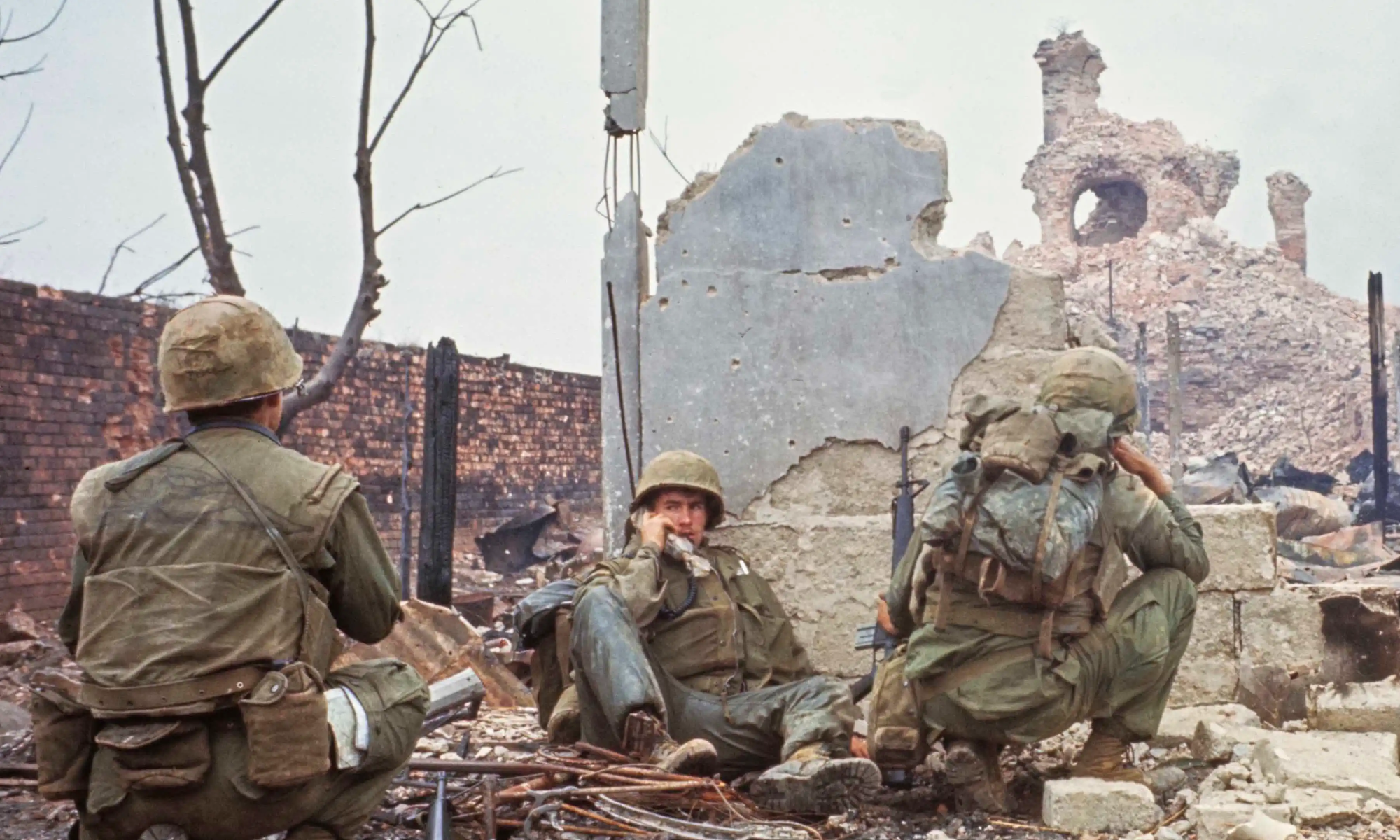
It is continuing in Europe in a form that has no precedent in any conflict of any prior generation. Surviving NATO ground forces, deep within the territories of the former German Democratic Republic and the former Polish People's Republic, are reported by the fragmentary signals that have reached the British military communications relay on Gozo to be operating in the absence of orders, in the absence of communications with rear-area headquarters most of which no longer exist, in conditions of catastrophic logistical disruption, and in environments contaminated by fallout from the counterforce strikes on the Polish silo fields at Pinsk and the Soviet strikes on the territories occupied by NATO. The forces are reported to be moving westward, in such order as their officers have been able to maintain. Many are reported not to be moving at all.
Surviving Soviet ground forces, in the territories of the former East Germany and Poland, are similarly reported to be in conditions of disintegration. Soviet airborne and air-assault formations in northern Iran, where the war began, are reported by the British signals relay at Akrotiri in Cyprus to have made contact yesterday afternoon with Iraqi forces under conditions of extreme confusion, neither side at the point of contact apparently aware of the events of the preceding twenty-four hours and neither side any longer in communication with rear-area headquarters that could inform them. The reports, this morning, indicate that the contact resulted in fighting that ceased only after both sides had received, by separate channels, reports of the destruction of their respective national capitals, and that the two formations have since broken contact and are conducting parallel withdrawals to no clear destinations.
In the central German plain, in the eastern marches of the Federal Republic, in the Polish countryside, isolated NATO and Soviet armored formations continue to encounter one another in conditions of mutual disorientation and to engage in reflexive combat whose military significance is zero, and whose human cost continues to accumulate.
The cities of the German Democratic Republic, of Poland, of Czechoslovakia, of Hungary, many of which were not directly struck, are receiving fallout in volumes and in patterns whose epidemiological consequences will be the subject of medical inquiry through the remainder of the lives of any inquirers. The civilian populations of those cities are reported, in the fragmentary accounts that have reached this island, to be largely sheltering in place, in the absence of evacuation routes that lead to any destination not also affected, in the absence of food and fuel deliveries from rural districts, and in the absence of medical infrastructure that has, in the main, ceased to function.
The Holy Father, in Geneva, has by the reports reaching this island today addressed the surviving European peoples at 9 a.m. Geneva time. He spoke for forty minutes. He spoke in the languages he had spoken on the 25th of June: Italian, Polish, German, Russian, English. He spoke for considerably longer in Russian than he had spoken on the previous occasion. He addressed, by name, the dead. He did not complete the address before requesting an interruption to compose himself. He requested of the leadership of the World Council of Churches, of the World Health Organization, of the International Committee of the Red Cross, and of the Conference of European Churches, all of whom are with him in Geneva, that they consider with him in the days to come "what may be done by those who have not been killed, for those who have." The address was transmitted by every surviving broadcasting authority capable of transmitting it.
In Malta, the Prime Minister, Dr. Eddie Fenech Adami, addressed the Maltese people at noon today and announced the offering of asylum, of medical care, of food, and of such accommodation as the island may provide, to "any human being who shall reach this island, by any means, from any direction, of any nationality, whose nationality may at this hour be ascertained or may not." The harbor of Valletta, this afternoon, has begun to receive small craft and a number of larger vessels from the burning ports of Italy, of southern France, of the Adriatic coast.
A Maltese fisherman, in the harbor at Marsaxlokk this morning, was overheard by a correspondent of this dispatch addressing his son, who is twelve. He said: "We are an island. We have always been an island. Carthaginians, Romans, Arabs, Knights, Frenchmen, British: we buried all of them. This summer we bury what the sea brings. That is what an island is for."
AUCKLAND — From this city, in this country, on this morning of the 2nd of July 1989, the first comprehensive assessment of the global circumstance produced by the events of the preceding 36 hours is, by the available evidence, here being undertaken, for the simple reason that this country, alone among nations of any consequence, possesses the telecommunications connectivity and political authority to undertake it.
New Zealand was not struck. Australia suffered impacts but not at the scale, as we can determine, suffered by other nations. The decision by the Soviet strategic command, to the extent that "decision" remains the appropriate term for the algorithmic execution of pre-delegated launch authorities through the perimeter system, to omit Australasia from the targeting plan is, by the assessment of every analyst at the New Zealand Intelligence Bureau in Wellington, attributable to the simple absence of strategic targets of priority sufficient to justify weapons in the diminishing Soviet inventory after the principal targets in the northern hemisphere had been allocated. The American military bases in Australia (Pine Gap, Nurrungar, North West Cape) were struck. The cities were not.
Australia, this morning, has lost three remote signals intelligence facilities and approximately 600 American and Australian personnel. The continent is otherwise intact. New Zealand is intact in its entirety. The cities of Auckland, Wellington, Christchurch, Dunedin, and Hamilton are intact. The agricultural districts of the Waikato, Canterbury, and Otago are intact. The harbors are operating. The hospitals are receiving patients in numbers that have not yet exceeded their capacity. The schools, the universities, the courts, the parliaments at Wellington and Canberra, the broadcasting authorities, the newspapers, the banks, the markets are functioning.
The Prime Minister of New Zealand, Mr. David Lange, addressed the New Zealand people at 9 a.m. local time today by way of Radio New Zealand and Television New Zealand, in a speech of which the substance has been transmitted to such broadcasting authorities of the southern hemisphere as the engineers in the basement of the Bowen House parliamentary complex have, through the night, been able to raise.
He said in part: "Fellow New Zealanders. Yesterday afternoon, the Northern Hemisphere of our planet was, by the choices of men in places far from this country, made the subject of an event that will be, in the assessment of every honest soul, the gravest event in the history of human life upon this planet. The cities of those hemispheres are burning. The peoples of those hemispheres are dying, in numbers that we are not at this hour in a position to estimate and that, when we are, we shall regret having estimated. The institutions of those hemispheres — the governments, the universities, the hospitals, the economies, the cultures, the ten thousand things by which a civilization sustains itself — are damaged in measures that we shall, in the years to come, learn the names of, and that we have at this hour no names for.
"New Zealand is not damaged. New Zealand is, this morning, in possession of the things that the world's surviving peoples shall require, in such measure as our small country may be able to extend them. New Zealand shall extend them. We shall extend our food. We shall extend our medicines. We shall extend our shipping. We shall extend our universities, which shall, in the months to come, become a refuge of every kind of learning that has, in the past day, been deprived of its homes in the cities of the burning hemisphere. We shall extend the asylum of our country to such persons as shall reach our shores by any means, of any nationality, in whatever numbers our country can receive. We shall not, in the year ahead, sleep easily. We shall not, in the year ahead, regard our small country as a country whose ordinary affairs are, in any sense, the appropriate subjects of our ordinary attention. The ordinary affairs of New Zealand have, this morning, become extraordinary, by the simple fact that we are still here when so many are not.
"I ask of every New Zealander, in this hour, the willingness to do the work that has come, by the catastrophe of others, to be ours. I ask the farmers to plant. I ask the doctors to attend. I ask the teachers to teach. I ask the broadcasters to broadcast. I ask the merchant marine to sail. I ask the New Zealand Defence Force to defend, by whatever measures the months ahead require, the things that we have, by the small mercies of our geography, retained.
"I ask, finally, the prayers of every faith of every New Zealander, for the dead of the Northern Hemisphere whose names we shall not know, and for the living of that hemisphere whose names we shall."
The Prime Minister concluded by announcing the formation, in concert with the Prime Minister of Australia Mr. Hawke, the Prime Minister of Fiji, the Prime Minister of Western Samoa, the Prime Minister of Papua New Guinea, and the President of the Republic of the Philippines, the latter by what communication has been possible through the Pacific telecommunications cable, of a Council of Pacific States, to coordinate the humanitarian, economic, and political responses of the surviving Pacific nations to the events of the past 36 hours.
The first meeting of the Council was scheduled for tomorrow morning, in Auckland.
The atmospheric scientists of the University of Auckland, of Victoria University at Wellington, and of the Australian National University at Canberra, in coordination with colleagues at the Australian Bureau of Meteorology, the New Zealand Meteorological Service, and the National Institute of Water and Atmospheric Research, issued at noon today a preliminary technical assessment of the climatic consequences to be expected from the events of yesterday. The assessment, signed by Dr. Jim Salinger of the New Zealand Meteorological Service and by Dr. Will Steffen of the Australian National University, drew upon the existing scientific literature on the atmospheric effects of large-scale nuclear exchange, in particular the so-called "nuclear winter" hypothesis advanced in 1983 by Drs. Sagan, Turco, Toon, Ackerman, and Pollack, and upon the preliminary observational data available from the southern hemisphere weather stations that had through the previous evening detected the early atmospheric signatures of the burning northern cities.
The principal conclusions of the assessment, in the language of the public broadcast:
The mass of fine particulate carbonaceous material injected into the upper troposphere and lower stratosphere of the Northern Hemisphere by the burning of approximately 600 to 1,000 major urban areas across that hemisphere is consistent with the upper bound of the Sagan et al. modelled scenarios.
The expected reduction in incident solar radiation upon the surface of the Northern Hemisphere over the 90 to 180 days following the event is on the order of 70 to 95 percent.
The expected mean surface temperature reduction in the Northern Hemisphere continental interiors over the same period is on the order of 15 to 25 degrees Celsius below seasonal norms.
The agricultural growing season in the Northern Hemisphere temperate zones is, for 1989, to be considered effectively cancelled.
The crossing of the smoke and ash plume into the Southern Hemisphere by way of equatorial atmospheric circulation is expected to occur on a timescale of weeks rather than months. The climatic effects in the Southern Hemisphere will be substantial. They will not, by the available modelling, equal those in the Northern Hemisphere. The agricultural growing seasons in the temperate Southern Hemisphere (Australia, New Zealand, southern Africa, Argentina, Chile) will be substantially reduced. They will produce.
The Southern Hemisphere will be cold. Crops will come up.
The remainder of the assessment, the authors have requested, shall be released to the public in the form of supplementary reports through the coming week, "as the data permit, and as the public is in a condition to receive them."
The harbor at Auckland, this afternoon, is full. Ships, from every flag of the Pacific and many of the Atlantic, have made for this country in the past 36 hours from as far as their bunkering permitted. The hostels and the schools and the marae and the churches of Auckland and of Wellington and of Christchurch are, by the order of the Prime Minister, opening their doors. The receiving stations are being established. The volunteers, this afternoon, are queuing in lines around the blocks of the principal cities, registering to assist.
A Māori elder, at the Ōrākei marae in Auckland this morning, addressed those gathered in Te Reo Māori, in language that has been translated for the purposes of this dispatch by the Māori Language Commission. He said: "The waka that come are not our waka. The peoples that come are not our people. The land they come to is not their land. But the land was given to us by the ancestors to keep, and to keep it is to receive. So we receive them. We will mourn with them the dead they have lost, and feed them what we have, and bury those of them who die here, when the time comes. We have said for a long time what kind of country this is. Now we find out."
The harbor of Auckland, this evening, is filling with lights.
JULY 1, 1999
TEN YEARS AFTER THE DAY: A REPORT
AUCKLAND — On this tenth anniversary of the events of the 1st of July 1989, referred to in the surviving English-language usage of the Southern Hemisphere as "the Day," and increasingly, by the generation born since, simply as "It," the Council of Surviving Nations, meeting since 1991 in this city, has issued through its statistical secretariat the decennial assessment that has, since the second anniversary, been the principal occasion of public reckoning with the events of that day and with the decade that has followed it.
The assessment is grim. It is, in the assessment of the President of the Council, the New Zealand jurist Dame Sian Elias, "less grim than the assessment of the fifth anniversary, and more grim than the present generation of New Zealanders shall, in the years remaining to them, find easy to live with."
The principal findings, so far as the present account can convey them. All figures are estimates of the Council's statistical secretariat, which has declined to attach margins to them.
Population
The population of the Earth on the morning of the 1st of July 1989, by the best estimates of the demographic authorities at the University of Auckland and the Australian National University, was approximately 5.18 billion persons.
The population of the Earth at the close of 1989, six months after the event, by the same estimates: 3.4 billion. The reduction, of 1.78 billion persons, was distributed as follows. Direct fatalities from the nuclear exchange itself, including blast, thermal, and acute radiation effects in the immediate days: 720 million. Fatalities from the collapse of medical infrastructure, sanitation, and food distribution in the affected hemispheres in the six months following: 410 million. Fatalities from the agricultural failure of the 1989 Northern Hemisphere growing season and the collapse of food import-dependent populations: 480 million. Fatalities from delayed radiation effects, infectious disease epidemics enabled by the disruption of public health, and exposure during the first nuclear winter: 170 million.
The population of the Earth at the close of 1994, five years after the event: 2.6 billion. The further reduction reflected continued elevated mortality in the affected hemispheres from cancer, infectious disease, malnutrition, and the secondary economic and political collapses of those hemispheres, against suppressed birth rates throughout the affected world.
The population of the Earth at the present writing, by the Council's decennial estimate: 2.4 billion. The decline appears to have stabilized. The proportion of the world population resident in the Southern Hemisphere, 12 percent in 1989, is at present 38 percent.
The Northern Hemisphere
The Northern Hemisphere, ten years after the event, is not uninhabited. It is depopulated.
Surviving population in North America, by the best estimates of the Canadian Department of Statistics and the United States Census Bureau in its post-event headquarters at Anchorage, is 95 million persons against a 1989 figure of 275 million. The largest concentrations are in Alaska, in northern Canada (in particular the Yukon and the Northwest Territories, whose populations have multiplied by orders of magnitude through migration from the affected south), in northern Maine and the Atlantic Canadian provinces of New Brunswick, Nova Scotia, and Newfoundland, in the Pacific Northwest north of the Olympic Peninsula, in the desert Southwest of the United States, in Hawaii (now, as of 1992, an independent constitutional monarchy under the restored House of Kalakaua), and in the Caribbean basin.
The continental United States is no longer, by any meaningful measure, governed as a single political unit. The United States Government in continuity, headquartered since 1991 at Anchorage, claims jurisdiction over those territories and populations of the former Union that recognize its authority. The recognized territories include Alaska, Hawaii, the surviving portions of Washington and Oregon north of the latitude of Seattle, the unaffected portions of the desert Southwest under the New Mexico Compact of 1993, the Atlantic Northeast under the Boston Compact of 1992, and a number of smaller jurisdictions. The recognized authority in much of the former territory of the lower forty-eight states is, in practice, exercised by state governments, by religious authorities, by military commands, by the warlordships of the agricultural midwest and California Central Valley that emerged in the famine years of 1990-92, and in many areas by no authority at all.
Surviving population in Europe, west of the Urals, is 35 million persons against a 1989 figure of 540 million. The pattern of survival is geographically uneven. Spain and Portugal, neither of which received direct strikes, retained substantial populations through the catastrophe, although both have lost more than half their pre-event populations to famine, disease, and the migration pressures of the past decade. Ireland, peripherally affected, retains a substantial population. The Scandinavian peninsulas and Iceland, lightly struck and shielded from southerly fallout patterns by atmospheric circulation, retain substantial populations and have absorbed, in the past decade, several million migrants from continental northern Europe. Switzerland, in possession of the most extensive civil-defense infrastructure of any pre-event nation, retained an estimated 60 percent of its pre-event population through the first nuclear winter. With a present population of 4.2 million, it has emerged as the principal continental European center of government, finance, scholarship, and humanitarian coordination. The provisional Government of the European Communities sits, since 1992, in Geneva.
The Holy Father, John Paul II, returned to Rome in 1991, after the fallout in the Lazio region had declined to levels permitting unsuited entry. He took up residence in what of the Vatican could be made habitable, and resumed the formal exercise of his pontificate. He was assassinated in November 1994 by a member of an apocalyptic fraternity that had emerged in the famine years of central Italy, on the steps of the basilica of St. Peter's, which he had been engaged in restoring with his own hands. He was succeeded by his vicar in Geneva, Cardinal Etchegaray of France, who took the name Pius XIII and who has from Geneva continued the works that his predecessor had commenced.
Surviving population in the territories of the former Soviet Union is estimated at 8 million persons against a 1989 figure of 287 million. The estimate is highly uncertain. The territories of European Russia are, in the main, depopulated. The territories of central Asia, less heavily struck and supported by Iranian and South Asian agricultural systems, retain larger populations. There is no successor state recognized by any external authority. There are, by the reports reaching Auckland, local authorities of varying scale and varying character, in numbers and in patterns that no authority has had the means to enumerate.
Surviving population in the territories of the People's Republic of China is estimated at 220 million persons against a 1989 figure of 1.13 billion. The Chinese authority, headquartered in Kunming in the southern province of Yunnan under the remnant leadership of the Chinese Communist Party, exercises authority over a substantial portion of the southern and southwestern provinces. Northern China is for the most part depopulated. The southeastern coastal provinces are administered, in practice, by a successor authority headquartered in Hong Kong, which received the British transfer of sovereignty as scheduled on the 1st of July 1997, and which has since administered an expanding territory of the former southern coastal provinces under arrangements that the Council of Surviving Nations formally recognized in 1998.
Surviving population in Japan, struck severely but possessed of a coherent government and substantial unaffected southern and western prefectures, is 38 million against a 1989 figure of 123 million. Japan, since 1992, has emerged as the principal industrial power of the surviving Northern Hemisphere.
The Southern Hemisphere
The Southern Hemisphere is changed. Its courts sit, its universities are open, its ships sail.
Australia and New Zealand have, in the decade since the event, become the principal political, economic, scientific, and cultural centers of the surviving world. The Council of Surviving Nations, meeting in Auckland, comprises 47 member states. The Council's principal executive arm, the Pacific Reconstruction Authority, headquartered in Wellington, coordinates international shipping, agricultural distribution, refugee resettlement, and scientific research across the world. The combined population of Australia and New Zealand, augmented by 6.8 million accepted refugees over the decade, is at present 28 million. The strain upon the social, economic, and ecological systems of both countries has been considerable. It has been accepted.
Argentina, Chile, and Uruguay, South American countries spared direct strike, possessed of substantial agricultural systems, and shielded by southerly latitudes from the most severe nuclear winter effects, are with Brazil the principal South American powers of the present world. The combined population of those four countries is 320 million, against a 1989 figure of 240 million. The increase reflects the absorption of refugees from the central and northern parts of the hemisphere.
Sub-Saharan Africa, lightly struck, was not spared. The agricultural collapses of the first nuclear winter, the disruption of import dependencies, the collapse of medical infrastructure (in particular the response to the AIDS epidemic), and the political and military disorders of the decade have reduced the population of the continent from 480 million in 1989 to 280 million at present. The political map of the continent bears little resemblance to the map of 1989.
India, struck only at military targets and possessed of a coherent government and substantial agricultural capacity, retains 540 million of its 1989 population of 832 million. India is, today, the most populous nation upon the planet. Its government, at New Delhi, exercises an influence in Asian affairs that no Indian government had in 1989 contemplated.
Climate
The first nuclear winter, of the seasons 1989-90 and 1990-91, has receded. The atmospheric particulate burden of the event has, by the measurements of the Australian Bureau of Meteorology and the New Zealand Meteorological Service, declined to levels approaching the pre-event baseline, although certain anomalies in stratospheric circulation persist. Global mean surface temperatures, at present, are 0.4 degrees Celsius below the 1989 baseline. The Northern Hemisphere agricultural growing seasons have, since 1992, returned to approximately 70 percent of their pre-event productivity in the cultivated areas. Those areas are, however, much reduced from their 1989 extent.
The radiological situation is, by the assessment of the International Commission on Radiological Protection at its present headquarters in Geneva, "manageable in the longer term and severe in the medium term." Cancer mortality, in particular among populations exposed to the early fallout patterns of 1989-90, remains at multiples of pre-event baseline rates and is expected to remain so through 2020. The genetic effects of the exposures will, by the assessment of the Commission, be the subject of inquiry through the present generation and the next.
The Closing
The Prime Minister of New Zealand, Jenny Shipley, in her address to the Council of Surviving Nations this morning at Parliament House in Wellington, observed that the work of the past decade had not, on the whole, been the work that any of the persons who undertook it had been raised to do.
"We were, in the country of my upbringing," she said, "the children of a small and prosperous and peripheral nation. We were taught to be modest about our country and modestly to expect of it modest things. We have, since the events of ten years ago today, been called upon to be a great deal less modest, and a great deal more, than the country we were raised to be. We have, by the testimony of every honest soul among us, fallen short. We have also exceeded what was, in the catastrophe of that day, expected of us. We do not know whether we shall, in the decade to come, sustain what we have, in the decade past, accomplished. We know only that we shall continue to attempt it."
The Prime Minister concluded by reading the names. They are read each year, on the anniversary, in the proceedings of the Council. The reading lasts twenty minutes. The names read are not the names of the dead, of which there are no lists. They are the names of the cities. They are read in the order in which the cities were destroyed.
JULY 1, 2039
A LETTER TO MY GREAT-GRANDDAUGHTER
On this fiftieth anniversary of the events that the surviving English language has agreed, by long usage, to call the Day, the New Zealand Broadcasting Corporation has invited a small number of citizens born before the event to compose, in such measures as their failing energies permit, accounts of the period that the present generation, now in its possession of the surviving world, has begun to ask after with the urgency that all generations bring to the questions about the times of their grandparents. I am, at 79, one of the persons asked. I shall, in the form of a letter to my great-granddaughter Mereana, who is six and who shall not, in the order of nature, read this until I am long buried in the cemetery at Karori, attempt the account.
Mereana, my dear,
You have asked me, in the way of small children, what the world was like before the Day. I have, in the way of the old, evaded the question, on the principle that you have been spared knowing what we lost and that our duty to you is to keep the sparing intact for as long as we may. Your mother has, however, informed me that you have begun to ask the question of others, and that you have begun to receive answers that are, in her judgment and in mine, not the answers that the question deserves. I'll therefore attempt my answer here, in the language I have, with the intention that you read it when you are older, and with the apology that I have taken longer in the giving of it than the asking required.
I was twenty-nine years old on the Day. I was a journalist for the Wellington bureau of the New Zealand Press Association. I was, on the morning of the 1st of July 1989, in my office on the Terrace, drafting a report on the parliamentary debate of the previous evening regarding the proposed amendments to the Resource Management Bill. I remember the topic because I have, in the half-century since, often considered how strange it is that such a topic should have been the work of my hands an hour before the world ended.
The world that ended was not the world that has, in the decades since, been described to you. It was a richer world. It was a more crowded world. It was, in the regions you have heard described as "the burning lands," a world of lights at night so numerous that, if you flew above the Earth as the astronauts of that period flew, you saw the cities of Europe and America and East Asia as patterns of light upon the darkened surface of the planet, and the patterns were beautiful, continuous, and they extended for thousands of kilometers across continents that had, for centuries, been in possession of a civilization that built and built and built. The civilization built badly in many ways. It built well in others. It built, above all, more than the present world has built or, perhaps, shall build.
It is gone. The lights are gone. The cities are gone, and many of the people, and most of the institutions, and the better part of what the human species had taken five thousand years to construct. They were gone in approximately one afternoon.
You have asked me what was lost. I won't, in this letter, give you the lists. The lists are kept by historians with more patience than I have. I'll give you only the categories, and you shall, when you are older, fill them in with the materials of your own inquiry.
We lost, in approximately five hours, the principal cities of the Northern Hemisphere — every great metropolitan center of the United States, of Europe, of the Soviet Union, of China, of Japan, save a small number that were, by accident or by oversight, spared. We lost, in approximately six months, the populations of those cities not killed in the strikes themselves but killed in the famines, the diseases, the cold, and the disorders that followed. We lost, in approximately five years, a further great fraction of the survivors, in numbers that the demographers of your generation are still computing.
In the same five hours we lost the great libraries of the world. The British Library, the Library of Congress, the Bibliothèque nationale, the Lenin Library, the libraries of Beijing and Tokyo, the great university libraries of every continent. The collections at the Vatican, the Hermitage, the Louvre, the British Museum, the Metropolitan, the National Gallery in Washington, the Prado, the Uffizi. The historical archives of every European nation, of which the substantial preponderance had been collected at central locations and were, in those locations, destroyed. We have, in the decades since, recovered what fragments had been microfilmed in advance, or copied to repositories outside the affected regions, or were carried out by individuals with the foresight and the means and the strength. The fragments are, by the assessment of the present custodians at the National Library here in Wellington and at the State Library in Canberra, perhaps two percent of what was. Perhaps less. The figure is, in the testimony of every honest librarian I have met, the most painful figure that the catastrophe has produced.
We lost the institutions of higher learning of the Northern Hemisphere. Cambridge and Oxford and the Sorbonne and Heidelberg and Berlin and Moscow and Leningrad and Beijing and Kyoto. Harvard, Yale, Princeton, Columbia, Chicago, Berkeley, Stanford, M.I.T. The medical schools, the law schools, the polytechnics, the conservatories. The faculties were, in the main, in their offices and laboratories at the hour of the strikes. The students were, most of them, on their summer arrangements but in numbers still resident at their universities. The institutions are gone in nearly every case. The traditions they sustained are, in many cases, gone with them.
We lost the great hospitals and medical research institutions of the affected hemispheres, with consequences that the public health records of the past five decades have spelled out. The cures and treatments that those institutions had been on the verge of producing in 1989, for cancer, for HIV, for aging itself, which we had in that year begun to speak of as a disease, were for the most part not produced. They have since been produced by the institutions of India and Japan and Hong Kong, in fewer numbers, at slower rates, and at higher costs. Many of the diseases that, in the world before, had been on the verge of mastery, are still, in the present world, killing people who would not have been killed by them in a land without the Day.
We lost, in approximately five hours, an entire generation of the world's children, in the hundreds of millions, who were on the morning of the 1st of July 1989 in school, in nursery, at play in the streets of cities that no longer exist. I've found that the loss of the children is the one that is, in the small hours, hardest to bear. The other losses can, in some measure, be reckoned. Nobody has yet found the unit in which to reckon that one.
I could give you many more categories. I'll give you one more. We lost, in the slower time of the decade following the Day, the political imagination by which the world had organized its affairs since the conclusion of the Second World War. The system of the United Nations, the system of the great trading institutions, the system of the alliances, the system of the international scientific and cultural organizations. They were not destroyed in the strikes. They were destroyed in the absence of the people that had, for forty-four years, sustained them. Nothing of comparable ambition has replaced them. The Council of Surviving Nations, here in Auckland, is a capable institution, and it has for fifty years done such work as the world has required of it. It is a smaller thing than the United Nations was, and it knows it.
You shall ask me, my dear, why this happened. I shall attempt only the briefest answer.
It happened because a small number of men in a single building in Moscow, having seized power in their country by force, having found themselves in possession of a war that they could not win and a country that they could no longer govern, having heard the false counsel of an even smaller number of men who told them that a demonstrative employment of the weapons in their possession would produce a political outcome they could survive, employed those weapons. It happened because, in the moment of that employment, the political authorities of the United States and its allies, finding themselves confronted with a choice that the strategic doctrines of forty-four years had taught them to make in the manner they made it, made it. It happened because, in the moment of that response, the surviving Soviet command authority, executing pre-delegated launch authorities through automated systems that had been constructed precisely to remove the human element from the decision in the event of a decapitating strike, fulfilled its grim task. It happened because, having begun, the Day could not be stopped.
The deeper question, the one you are old enough now to begin asking and not old enough yet to receive a sufficient answer to, is why we, in 1989, organized our affairs so that an outcome of this character lay within the power of any small group of fallible men to produce. The answer to that question is the work of your generation, my dear, and of your children's generation, and of the historians of the centuries to come. I won't attempt it. I'll observe only that in the year I turned twenty-six, the strategic analysts of that period counted approximately seventy thousand nuclear weapons deployed by the principal nuclear powers, and that the existence of those weapons was treated, by the political and intellectual authorities of every great nation, as a circumstance that the species had no choice but to accept. We accepted it. We accepted it for forty-four years. On the forty-fifth year, we paid for the acceptance, and we paid in measures we have not yet finished counting.
I'll close, my dear, with what your mother has asked me to close with. She has asked me to tell you that the world you have been born into, while smaller and harder and colder than the world that I was born into, is not a world without hope. She is right. The world you have been born into has, in the half-century since the Day, learned things that the world before never learned. It has learned that the Earth is small and that the human species is one species. It has learned that the institutions of civilization are precious and that they are not, in any sense, automatic. It has learned that the great tasks of human life — the feeding of the hungry, the teaching of the young, the healing of the sick, the consoling of the bereaved — are tasks that must be done by hand, every day, by people of patience and of care, and that the technological and political abstractions by which the previous world had attempted to relieve itself of those tasks were, in the catastrophe, the first things to fail.
You shall, when you are older, do these tasks. You shall do them in a country that, by the patience and the care of the people of your great-grandmother's generation and of your grandmother's and of your mother's, has remained a country in which the tasks may be done. You shall do them in the company of others who have, by the inheritance of their grandparents' choices, the same opportunity. You shall, in the course of your life, encounter persons who have asked, as I have asked, whether what was preserved was worth what was lost. You shall, my dear, give them the only answer that is, in the world we now inhabit, available.
You shall say: the world is what we have. We shall make of it what we may.
Your great-grandfather loves you.
He shall, in the time remaining to him, continue to do so.
—David Lange Whitley, Wellington, 1 July 2039